| Step 1: Introduction to the bloodless approach |
|


The term "bloodless medicine" refers to a variety of techniques that allow a patient to be treated without blood transfusions. This means that the patient does not receive any major blood products that have been stored or provided by donors.
You may wish to request bloodless medicine techniques if you are scheduled to undergo a surgical procedure. In addition, some of these techniques can be applied to patients who have suffered traumatic injuries.
Bloodless techniques may be performed before, during, and after your surgery, and may include a combination of diet, medication, surgical techniques, and other strategies. Some of the common goals are to:
- Boost your red blood cell count prior to surgery
- Monitor and optimize oxygen delivery during surgery
- Avoid blood loss during surgery
- Collect and reuse your own blood during surgery
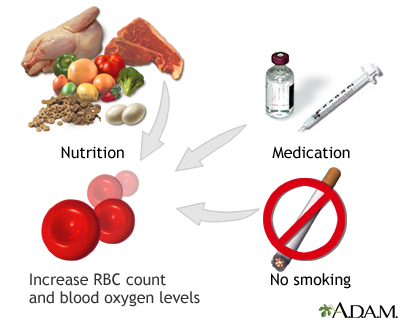
| Before your surgery, the goal will be to boost your red blood cell (RBC) count and oxygen to optimal levels. |
Bloodless medicine is growing
The practice of bloodless medicine is growing by leaps and bounds. In early 1990, you would have been able to choose from only a small number of medical centers providing bloodless health care. By 1996, you could have chosen from about 76 centers. Today, more than 100 American medical centers are known for providing bloodless care, and even more centers are exploring the technologies and practices that will make such care a regular option for interested patients. Overall, health care practitioners are making efforts to avoid the use of blood products whenever possible, even in centers that do not specifically focus on bloodless medicine.
To continue to the next step of this guide, click "next" below.
 |
|


|
Review Date:
6/28/2011 Reviewed By: Todd Gersten, MD, Hematology/Oncology, Palm Beach Cancer Institute, West Palm Beach, FL. Review provided by VeriMed Healthcare Network. Also reviewed by David Zieve, MD, MHA, Medical Director, A.D.A.M., Inc. |
 All rights reserved.