


GI specialist
Introduction
The purpose of this tool is to help you decide whether or not to see a gastrointestinal (GI) specialist. When making a decision like this, you must balance:
- The reasons for seeing the specialist
- The potential health risks, drawbacks, or limitations of the specialist
- Whether there are alternative specialists that may be more appropriate
- Cost
This tool is not a substitute for professional medical care and advice. Work with your doctor to help you make this decision. A second opinion from another doctor or specialist may be valuable. There is usually no exact “right” or “wrong” answer.
Your physician may make certain recommendations to you. However, the final decision about whether to see a specialist rests with you.
What does the specialist do?
A GI specialist can diagnose and treat several gastrointestinal problems, ranging from ulcers to inflammatory bowel diseases. A G.I. specialist also can perform colonoscopy, upper endoscopy, and other special tests to examine different parts of the digestive tract.
A specialist can evaluate your pain or problem using a variety of tests. These tests may include an upper GI and small bowel series to examine the esophagus, stomach, and small intestine. A lower GI test may be recommended to examine the colon or large intestines. A barium enema may also be used to diagnose and evaluate the extent of inflammatory bowel diseases.
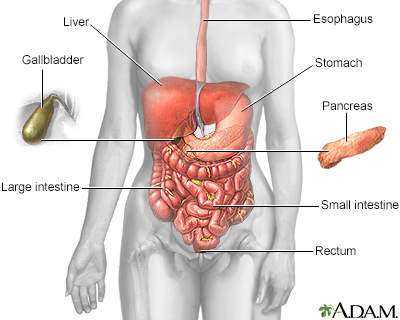
Depending upon your gastrointestinal problem, a specialist can recommend lifestyle adjustments, such as a change in eating habits, or prescribe medication. A specialist can also perform or refer you for surgery.
Key points
- Remember that just meeting a specialist to talk does not mean you must agree to further testing or medication use.
- A specialist visit can cost time and money (often a co-pay for your insurance).
- Although your primary doctor can begin treatment for many gastrointestinal disorders, a GI doctor has expertise in managing difficult or hard-to-treat cases.
- GI doctors are also trained to manage liver diseases, such as hepatitis B and C, gallbladder problems, and pancreas disorders.
- GI doctors are actively involved in screening for colorectal cancer, as recommended by the American Cancer Society.
How much time this decision tool will take
5 - 10 minutes
What this tool will provide
- A personalized list of factors for you to weigh
- Questions to ask your doctor
- Alternatives to seeing a GI specialist
- Recommended reading
Reviewed By: Linda J. Vorvick, MD, Medical Director, MEDEX Northwest Division of Physician Assistant Studies, University of Washington, School of Medicine. Also reviewed by David Zieve, MD, MHA, Medical Director, A.D.A.M., Inc.
- American College of Gastroenterology. Practice guidelines: Updated guidelines for the diagnosis and management of gastroesophageal reflux disease. American Journal of Gastroenterology. 2005;100:190-200.
- Levin B, Lieberman DA, McFarland B, Smith RA, Brooks D, Andrews KS, et al. Screening and surveillance for the early detection of colorectal cancer and adenomatous polyps, 2008: a joint guideline from the American Cancer Society, the US Multi-Society Task Force on Colorectal Cancer, and the American College of Radiology. CA Cancer J Clin. 2008. Published online before print March 5, 2008.
- Mandel JS. Screening for colorectal cancer. Gastroenterol Clin North Am. 2008;37:97-115.
- Rabeneck L, et al. Impact of upper endoscopy on satisfaction in patients with previously uninvestigated dyspepsia. Gastrointest Endosc 2003;57:295-9.
© 1997- A.D.A.M., a business unit of Ebix, Inc. Any duplication or distribution of the information contained herein is strictly prohibited.
 All rights reserved.